The Great War Hut
Constructing the huts
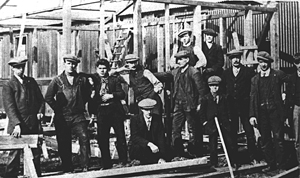
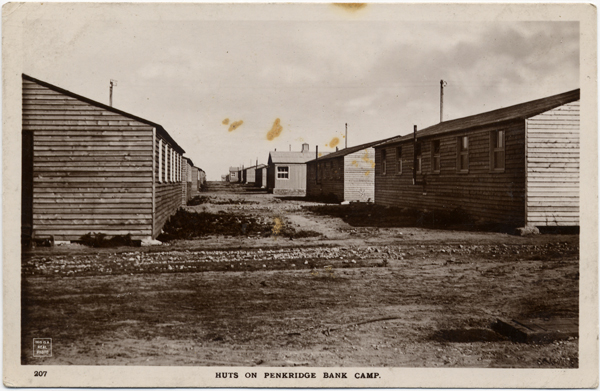
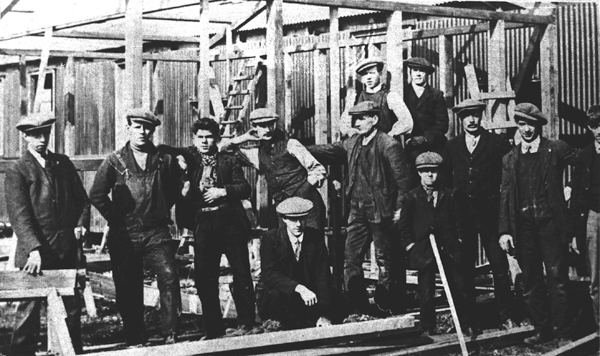
Local construction workers onsite c.1915 The huts were constructed in wood with a door in each end and windows down the side. The first troops began to move into the huts in early 1915.
Usage
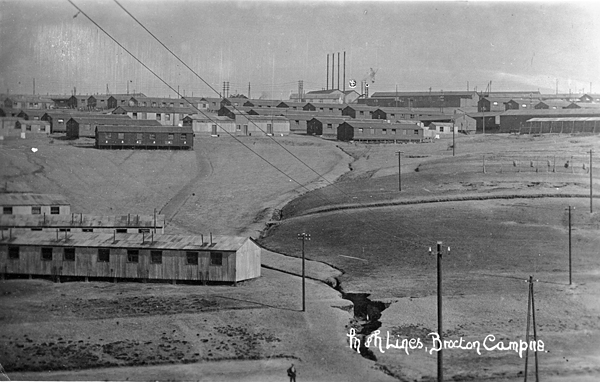
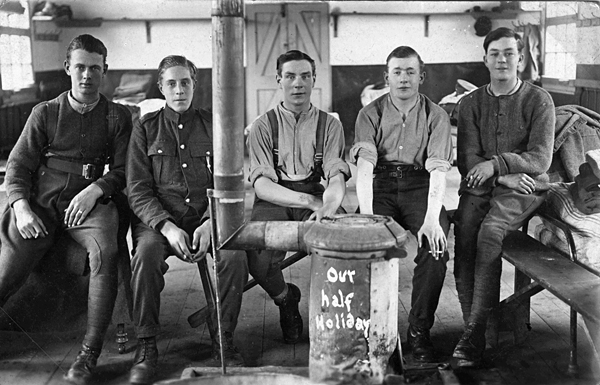
There were two types of accommodation hut on the camps those for officers and those for enlisted men. The officers each had their own stove and the photograph shows the hut in the foreground with several chimneys . The huts in the distance were the huts for the ordinary soldiers and they had to share one stove which was located in the centre of the hut.
|
|
|
Enlisted huts to rear and Officers huts in foreground at Brocton camp
|
|
|
|
|
Only one stove to keep them warm in the cold winters
|
|
|
|
|
Home for the duration of the soldiers' training
|
|
The huts were home for the duration of the soldiers' training both eating and sleeping here. They even spent Christmas here too!
After the War
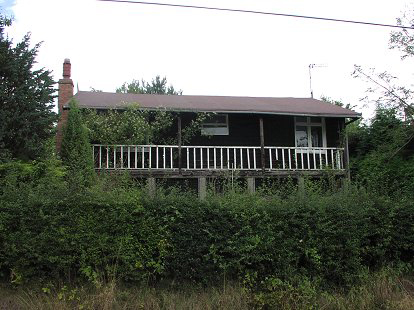
The huts were dismantled and removed from Cannock Chase around 1920. Many of the huts were sold to locals who used them as workshops, houses and even as a village parish hall.
Cannock Chase Great War Camps Interpretation Centre
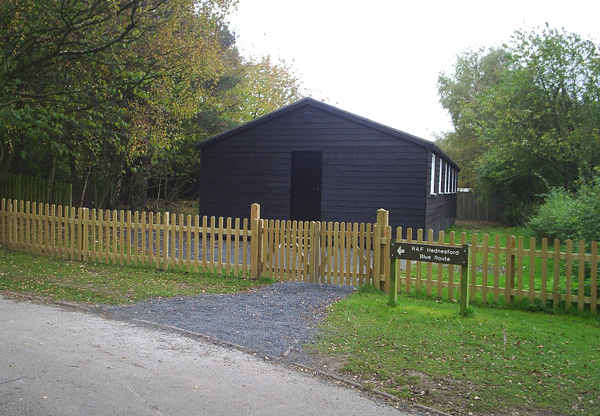
The hut which was to become the Cannock Chase Great War Camps Interpretation Centre spent 85 years of its life as a parish hall in the village of Gayton, around 10 miles north of Cannock Chase. It was used to host whist drives, dances, wedding receptions as well as local meetings.
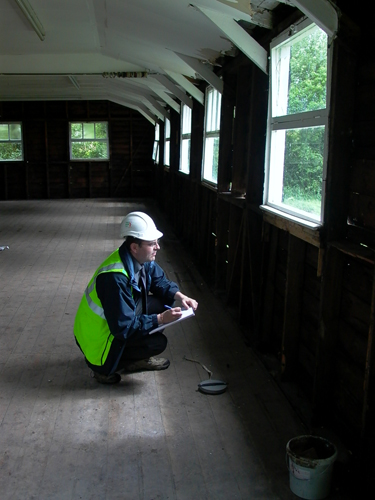
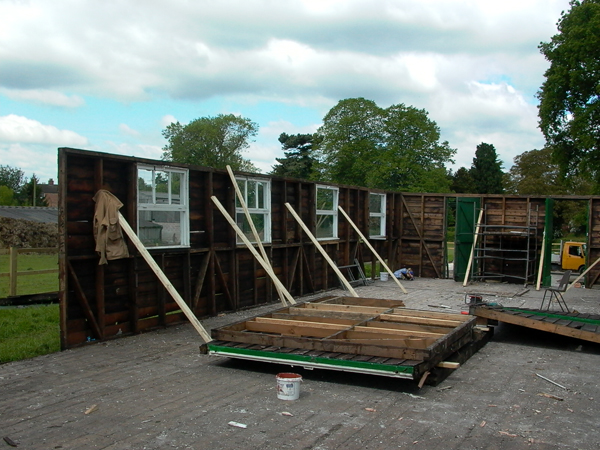
In 2006 when Gayton Parish Council secured funding for a new parish hall they offered the old hut to the Friends of Cannock Chase who, in partnership with Staffordshire County Council, gained funding from the Aggregates Levy Sustainability Fund to re-erect the hut on the Chase. The parish hall was dismantled in May 2006, but before this was completed an archaeological building recording survey was carried out to ensure that is could be accurately reconstructed. It only took three weeks to dismantle the hut and then it was removed to a secure storage area prior to its reconstruction next to Cannock Chase Visitor Centre.
|
|
|
Undergoing archaeological building recording
|
|
|
|
|
Hut being dismantled in Gayton
|
|
|
The rebuilding of the hut was carried out in the Spring of 2007 and had been completed by June 2007. Much of the original hut has been preserved and the interior has been partially fitted out as it would have looked in c.1916 at the height of its life as the home to those young men who were to be sent out to war in
northern France and Belgium.
|